Incarcerated Youth
Members advocate for students in state custody amid proposed changes
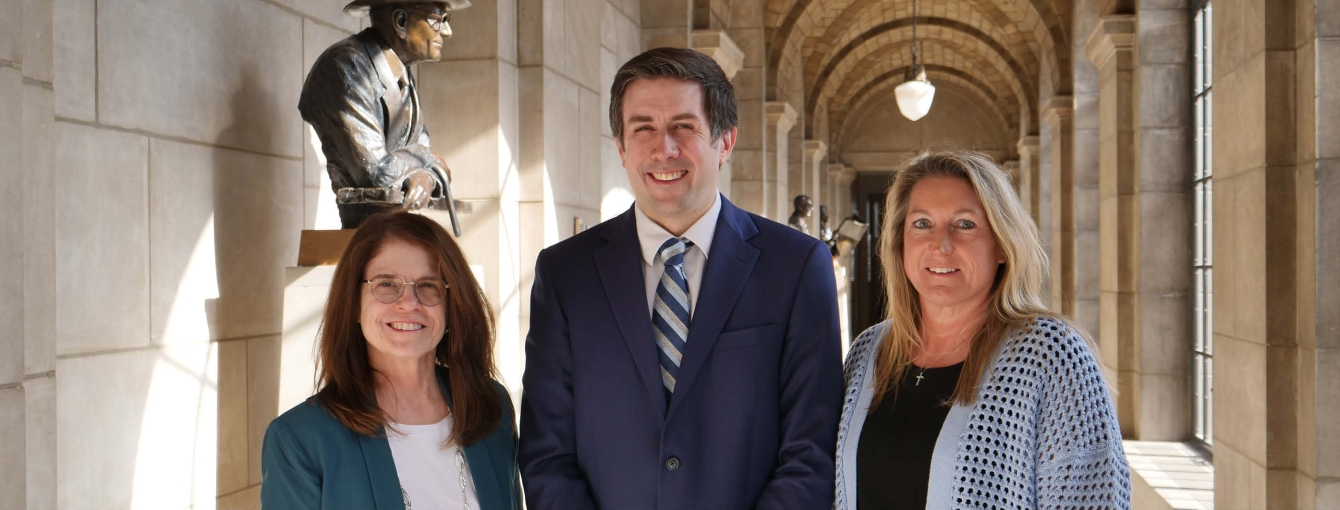
Standing in the Capitol rotunda in early March, NSEA President Tim Royers, along with representatives from Voices for Children in Nebraska and the Nebraska Association of Public Employees, held a news conference raising concerns about Nebraska’s plan to reshape youth corrections facilities under LB867—a bill that would relocate more than 100 youth, disrupting their education and critical supports for rehabilitation, and has now been given priority status as the legislative session continues.
A System in Flux
What began as a narrow proposal related to gender designation policies in youth facilities has since expanded into a sweeping restructuring of Nebraska’s youth rehabilitation system. LB867, a Health and Human Services Committee priority bill, was significantly broadened through an amendment that added provisions from another measure.
The plan would set off a series of relocations across the state’s youth facilities. Boys currently housed at YRTC-Kearney would be moved to the Nebraska Correctional Youth Facility in Omaha, while girls from YRTC-Hastings would be relocated to Kearney.
Youth receiving treatment at the Whitehall campus in Lincoln would be transferred to Hastings, and some youth currently in Omaha would be moved into a renovated unit at the state’s Reception and Treatment Center in Lincoln, an adult correctional facility. What is being proposed is not a single policy change—it is a system-wide disruption affecting where youth live, learn and receive treatment.
On the Front Lines
Among those raising concerns on behalf of her students was NSEA member Lisa Irwin, a media specialist at West Kearney High School, part of the Youth Rehabilitation and Treatment Center in Kearney, who testified before senators about the potential impact of the proposal. Irwin and fellow educator Tricia Jacobsen are members of the State Code Agencies Teachers Association (SCATA), whose members are state employees working under the Department of Health and Human Services.
In addition to reporting to school leadership, these educators must also operate within state regulations and facility-level rules, navigating multiple layers of oversight while serving students with complex needs. Educators in these settings are not only teachers—they are part of a highly regulated system where education, treatment and state policy intersect.
Education vs. Screens
She also raised concerns about limited classroom space at the Omaha facility expected to serve youth relocated from Kearney.
“A reduction in certified teaching staff and limited instructional space would significantly restrict access to in-person, teacher-led instruction,” Irwin said. “As a result, instruction would rely on online learning platforms.”
Irwin warned that a shift to primarily online instruction would not meet students’ needs.
“Youth will spend extended periods working independently at computers, progressing through lessons by passively scrolling through screens,” she said. “Our youth require direct human interaction, not instruction limited to prerecorded video.”
“They achieve success with clear, scaffolded instruction, guided practice and frequent real-time feedback,” Irwin added. “They thrive through consistent, trusting relationships, like those they build with our teachers.”
For students with significant academic gaps, disabilities and emotional needs, education is not content delivery, it is relationship-driven and requires consistent, in-person support.
Rehabilitation & Stability
YRTC students are already undergoing treatment to address behavioral, mental health and substance use needs. Therapists use an integrated care model to support co-occurring issues, making consistency across environments critical.
Tricia Jacobsen, a teacher at YRTC-Kearney, testified in opposition, urging lawmakers to consider both the educational and economic impacts of the proposal.
“Budget decisions reflect values,” Jacobsen said. “In this case, the burden of ‘doing more with less’ is being placed on vulnerable youth and smaller communities rather than shared equitably across the state.”
Jacobsen raised concerns that the proposal, alongside broader budget cuts, could reduce teaching positions and weaken educational programming.
“Asking incarcerated youth to receive less education and treatment raises serious questions about how we are defining necessity,” she said.
LB867 would roll back Rule 10 accreditation at facilities. This change would likely lower educational quality, reduce accountability and disrupt credit transfer creating a separate, lower-tier education system for youth in state custody.
“Education is a critical component of treatment,” she said. “Cutting teachers in Kearney while attempting to recreate educational programming elsewhere undermines rehabilitation and increases the likelihood of recidivism.”
When education, treatment and environment are disrupted simultaneously, rehabilitation outcomes are placed at risk.
Jacobsen also pointed to logistical and financial challenges tied to relocating youth.
“The NCYF facility does not currently have enough classroom space to educate an additional 90 to 110 youth,” she said, noting that expansion would require costly renovations and additional staffing.
Additional concerns have been raised about safety, staffing and whether receiving facilities have the capacity to serve youth without disruption. Educators warn that these unanswered questions further underscore the risks of moving forward with a plan that could destabilize both learning environments and rehabilitation efforts.
The state would need to relocate more than 100 youth while hiring and training new staff, as many current employees may not relocate. They warn the disruption could delay graduation and interrupt services for students with special needs.
Relocation at this scale is not just logistical—it introduces compounding risks to safety, staffing and continuity of care.
Outcomes Over Optics
Royers also raised concerns about whether the proposal would improve student outcomes, saying the plan fails the most basic test.
“At the end of the day, we should be able to say that any proposed plan would strengthen our ability to educate and rehabilitate,” Royers said. “And yet it has been readily apparent that this proposal will not improve outcomes, it’s to balance a spreadsheet.”
Policy decisions that prioritize cost over outcomes risk undermining both education and rehabilitation.
Jacobsen also challenged assumptions behind relocating youth closer to Omaha.
“Youth come from all across Nebraska,” she said, noting Kearney’s central location supports families statewide.
She added that distance from harmful environments can aid rehabilitation.
“Moving youth does not fix operational issues,” Jacobsen said. “Investment, accountability and program improvement do.”
The path forward is not relocation—it is investment in the systems that support education, treatment and long-term success for Nebraska’s youth.

New Educators
The New Generation of Educators in Nebraska (NewGEN) exists to drive early career educators towards success by fostering membership engagement, advancing teaching excellence through professional development, and creating a network of support through mentorship opportunities and classroom resources.

Join Now
NSEA is here for you. From professional growth opportunities and support, to amplifying your voice in public policy affecting you and your classroom, to providing perks like college debt assistance, NSEA has your future in mind. Learn more and join NSEA now.

The NSEA Children's Fund
NSEA established the Children's Fund in 1994 to fulfill modest and immediate needs of struggling students encountered daily by NSEA members in their workplaces. Find out how you can help a child today.
L.E.A.R.N — Providing valuable learning opportunities for educators: LearnNebraska.org Visit Website